I think it goes without saying but I’m going to say it anyway, this winter was nasty. It was long, cold, dark and snowy, and my nose, lungs and throat were plagued by mucus and phlegm. Spring has officially hit our calendars, yet I’m desperately curious as to when the sun will warm us again and when my immune system will give me a fighting chance. It’s been a bit rocky, but I’m learning how to be patient and how to weather the storm.
Training started in December – the same as it has for the past four years. But as I’ve said many times already, it was a rougher start this year and harder for me to get back into a groove. The bundled up from head to toe, snot flying, toes freezing long runs on Monday nights that started in the dark and ended in the dark, the 5am wake up calls to what felt like the dead of night, and countless hours of spinning indoors on a trainer, felt more dreary and endless than usual. And, the empty cough syrup bottles, kleenex boxes and gallons of snot and phlegm reached an all time high. Being sick this winter quickly became the bane of my existence.
I first got sick with a horrible bronchial cough the week before Ironman in July – awesome timing – and then reared it’s ugly head again in November, December, February and April. I started to worry about my health and questioned why I was getting sick so often. I turned to Doctor Google far too many times, and gave myself anxiety about whether or not I was dying. I swear that before triathlon I never paid this much attention to how many times I was getting sick, or worrying about how many days I would be sick. I just dealt with it. But as an athlete, you become obsessive – obsessed with the day in and day out training, performance and health. With missing so many workouts, I questioned if I would be ready, and on the other hand, questioned if I even wanted to do it. Trying to get my momentum going was incredibly challenging. Just when I started to feel a shift in the right direction, I would get derailed. My decision making pendulum about whether or not to continue training has swung back and forth many times since December. I have thought it was a sign that perhaps I needed a change or a break, but each time I missed a workout, I felt an odd lingering emptiness and a burning desire to get back to the next one. So, I know the passion is still there, I just have to find my rhythm.
This isn’t the first time I’ve faced setbacks or doubts, I think those happen almost every year to every athlete. I have spent time dwelling on bad performances, recovering from injuries and illnesses, enduring through bad weather, trying to maintain relationships outside of triathlon, flip flopping on my commitment to the sport – all of those are obstacles, and all of them have taught me, and continue to teach me a little bit about myself.
This winter, in particular, I’ve learned how to restrain myself from acting impulsively or hastily. I’ve learned how to know when it’s right to wait out the storm and when it’s right to push through. I’ve learned how to trust my gut and go with my instincts. I’ve learned which cough syrups work best and which tissue brand is the softest. I’ve learned more patience.
There really isn’t a time when I’m not learning something. Over the past four years, training for Ironman has taught me a lot. Not only about the sport, but more importantly, about mentality and who I am. The training regime is not easy and you need to be invested both mentally and physically, and you’ll either push through or you’ll find another hobby. I guess, I’m one of those people who just keeps pushing through.
With May on the horizon, I’m hoping that the last of the dreary weather is moving elsewhere and that cold season won’t follow me through to next month, or any month after that. I’ve spent enough time battling it out with Mother Nature and snot – I’m ready for the next challenge.
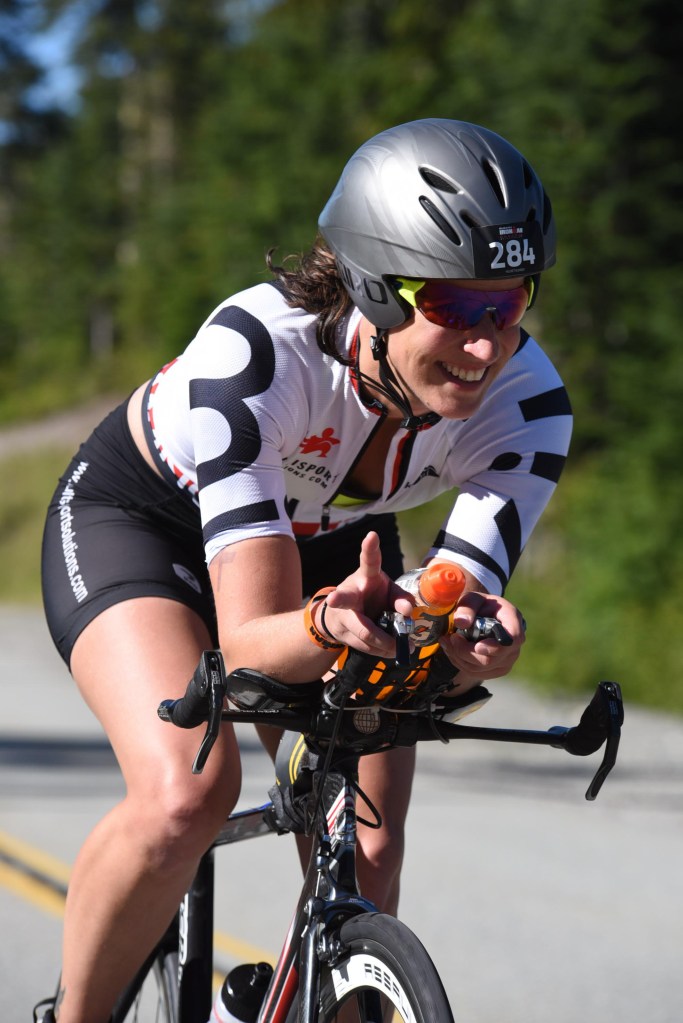
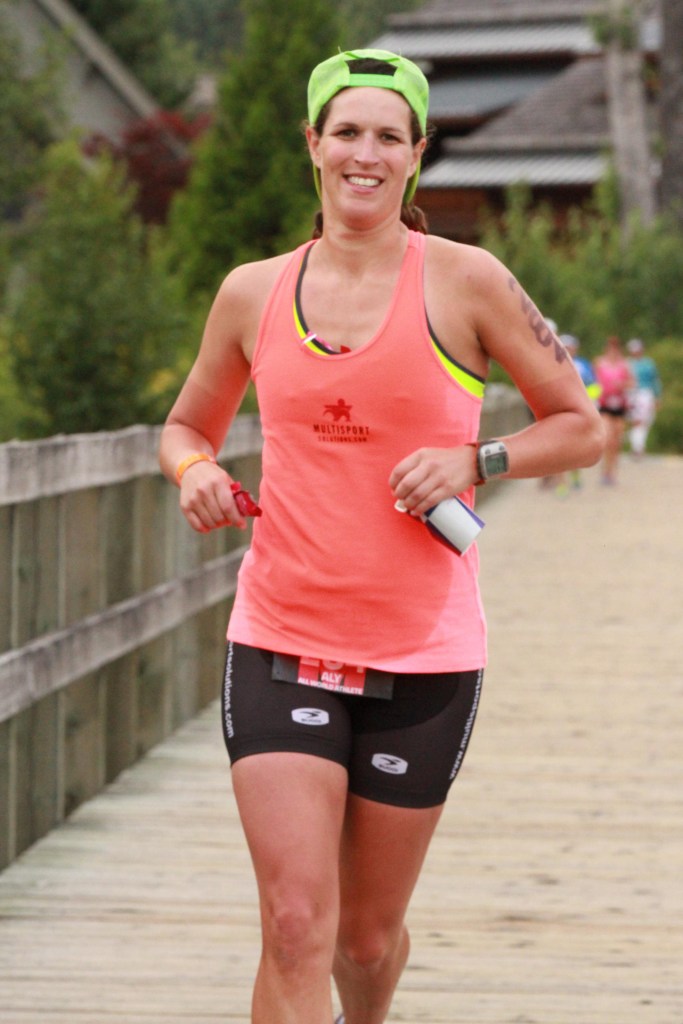
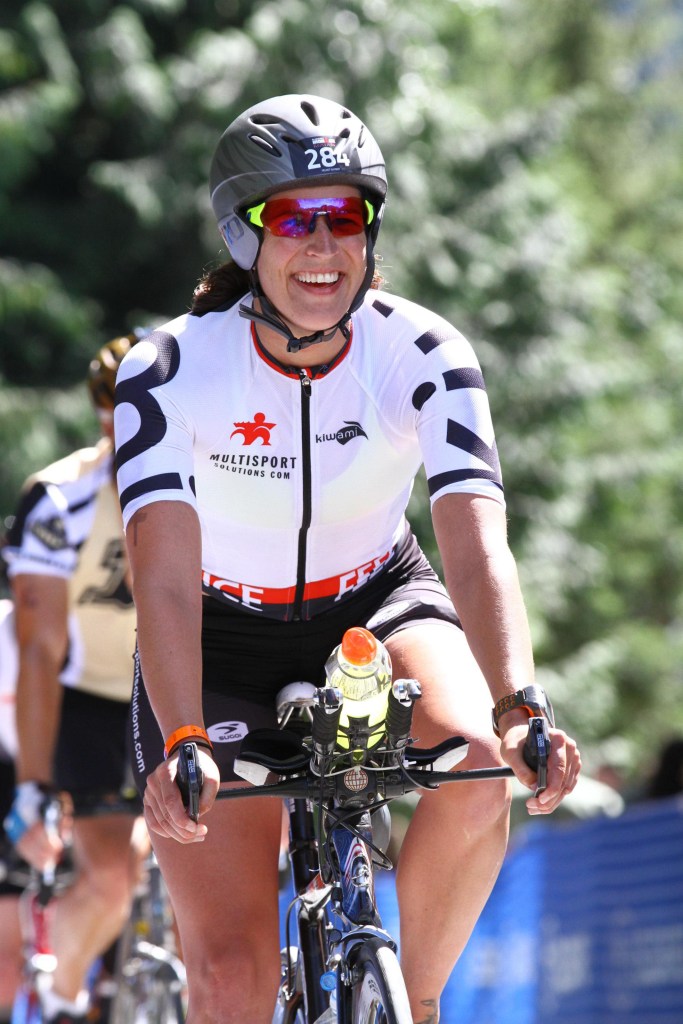
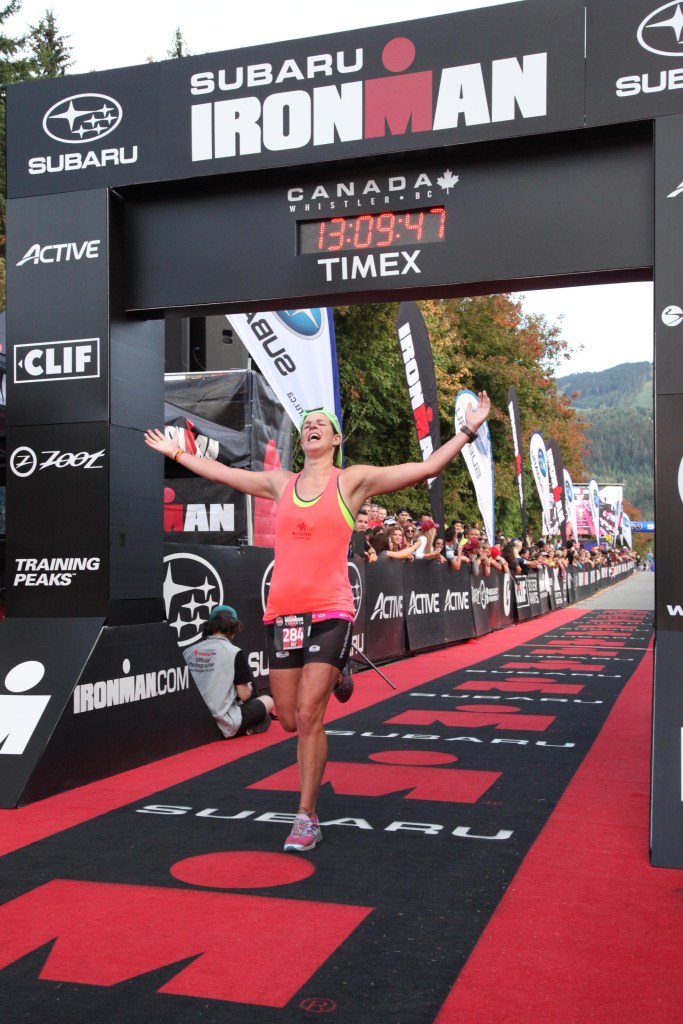
 The first year, I was inexperienced and naive, and I bonked with 52 kilometres left in the ride. I think I best summarized it when I said, “It kicked my ass.” I remember when I reached the summit of Cardiac Hill – the final steep climb just beyond the 180 kilometre mark – I collapsed off the bike with neither the energy nor the care to un-clip from my pedals. My training partner, Vince, captured the perfect image of me sitting halfway in a ditch on the side of the road with defeat exuding from every inch of my body.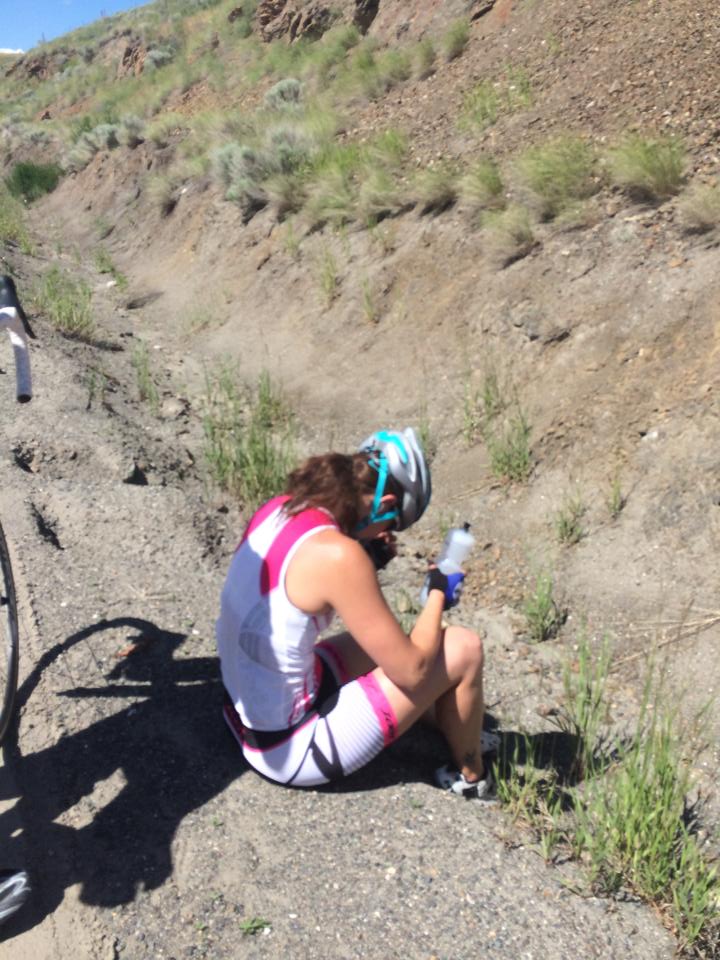
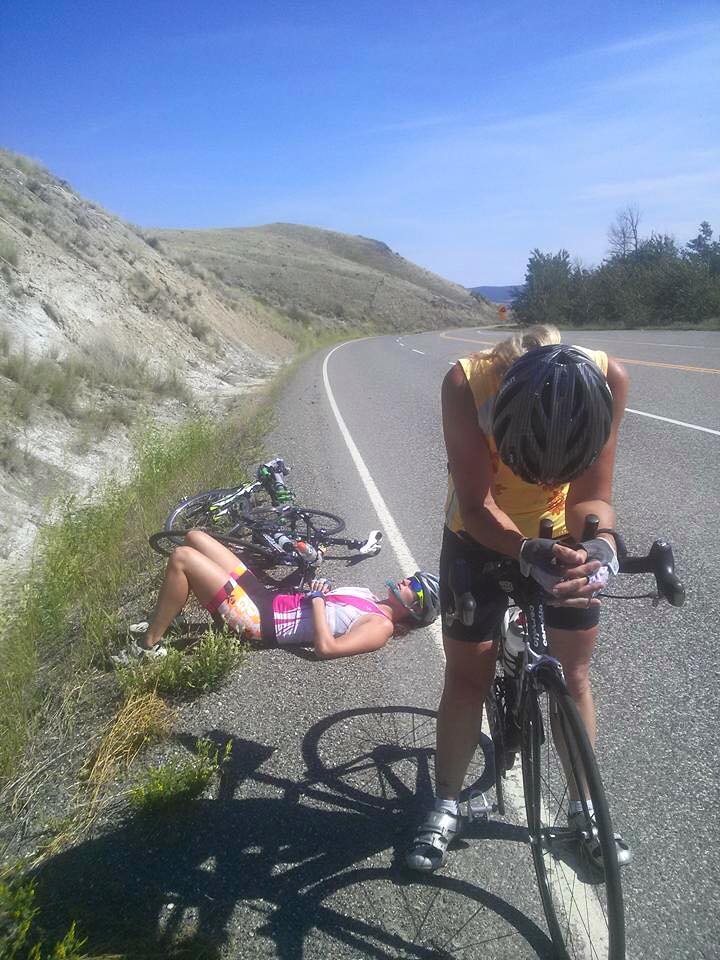 While I’ve been able to finish every Merritt Loop, I have not yet been able complete the 45 minute brick run afterwards or reach my goal of riding 200 kilometres. While the complete loop from start to finish is a few kilometres shy of 200K, it has always been my goal to put in the extra time to get to that number. In 2014, I was short 4.4 kilometres, and in 2015, it was just 700 metres! There was nothing left in me that could pedal another rotation.
 As a middle of the pack cyclist amongst my group, I have been finding myself alone lately for most of the run and bike workouts. And, the Merritt Loop was no different; I was left alone with my thoughts and a long, lonely stretch of road. This year, unlike every other year, it was cold. My fingers were frozen and at times my teeth chattered against one another. Strong headwinds and rain on the other side of Logan Lake made the ride challenging and, at times, made me question myself. “Why do I like to be tortured? Why does anyone do Ironman? Why am I riding my bicycle in the middle of nowhere, by myself?” At times, I was happy and would sing songs about my granola bar, or my Gatorade, or the rain, or the number 60. At one point, when I couldn’t feel my fingers and all I could hear was the howling wind blowing past my frigid ears, I yelled curse words and cried. The best parts were when I smiled and laughed out loud. You could call me manic, but I think that’s just par for the course. Eight hours is a long time to be alone on your bike with nothing but your own thoughts. The true victory of the day though, was taking a selfie standing tall, proud and strong with a wide smile on my face at the top of Cardiac Hill. The picture that day was not of defeat, but success. I also, put in the extra 5 kilometres to get to 200K, and finished my brick run. For the first time, I had succeeded. It took smart planning, experience and a business-like attitude of just getting it done.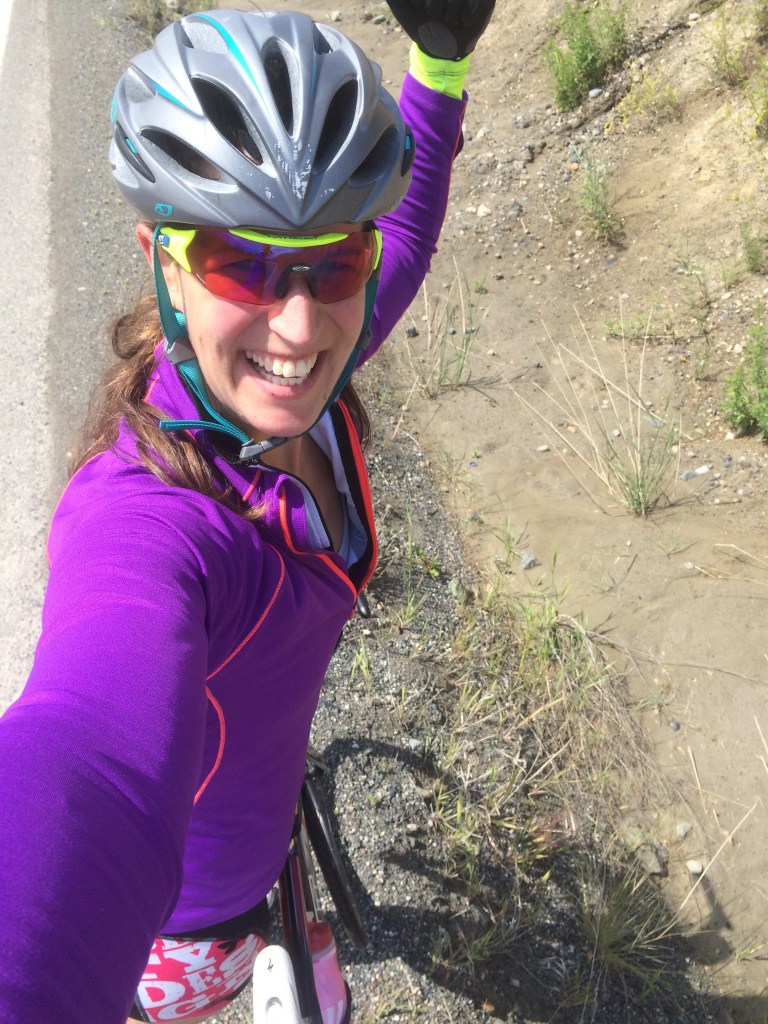
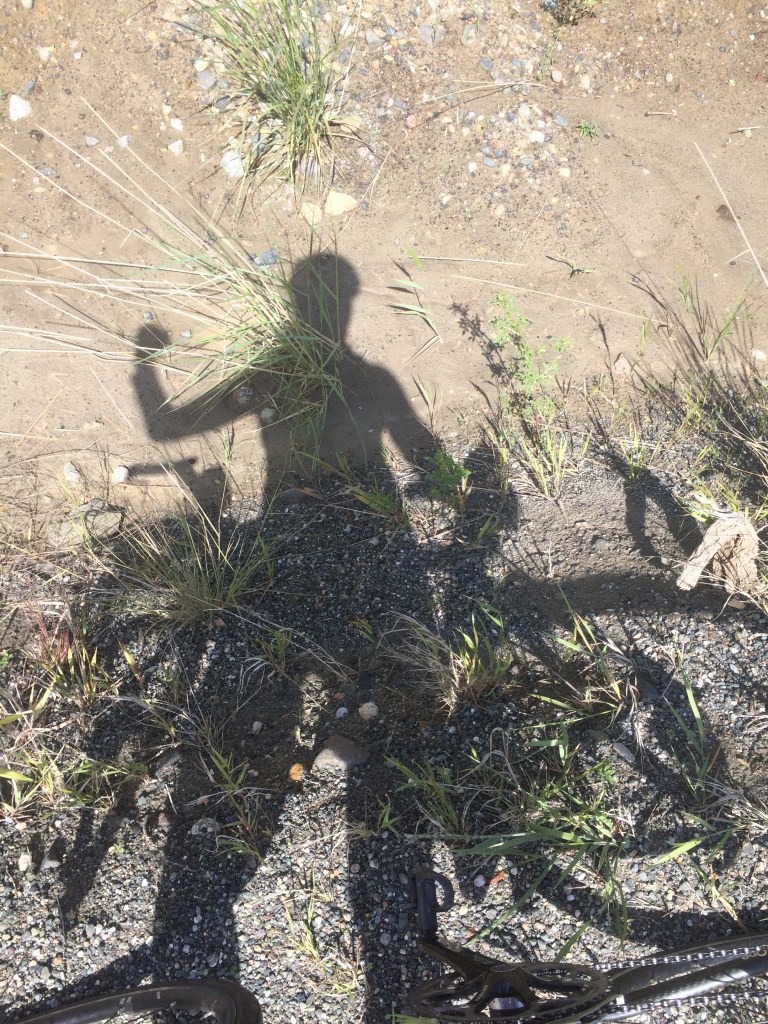 In previous years, the Merritt Loop has defeated me to the point where I was forced to take the following two days off from training. This year, success meant the work was not over on Sunday evening. It meant I still had two more big workouts the following day – a gruelling set of 9X400 metres in the pool and a 26 kilometre run with tempo. I was already in pain from head to toe; it would take every ounce of physical and mental prowess I had to keep going.
 Three years ago, I made a vow to change my life, to move on from the things that weren’t making me happy, to take on a challenge and live life every day with purpose. That plan didn’t include walking through life in comfort. The plan was to push beyond my limits. I’ve done that in more ways than one. This past weekend is a testament to that, and although it’s not all sunshine and rainbows, it’s making me stronger, faster and in the end, a happier human being.
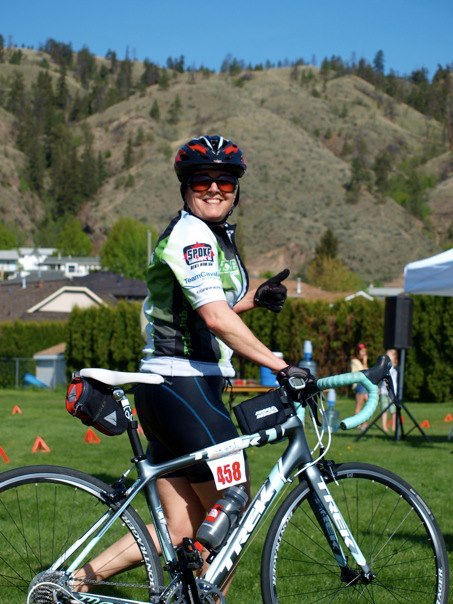
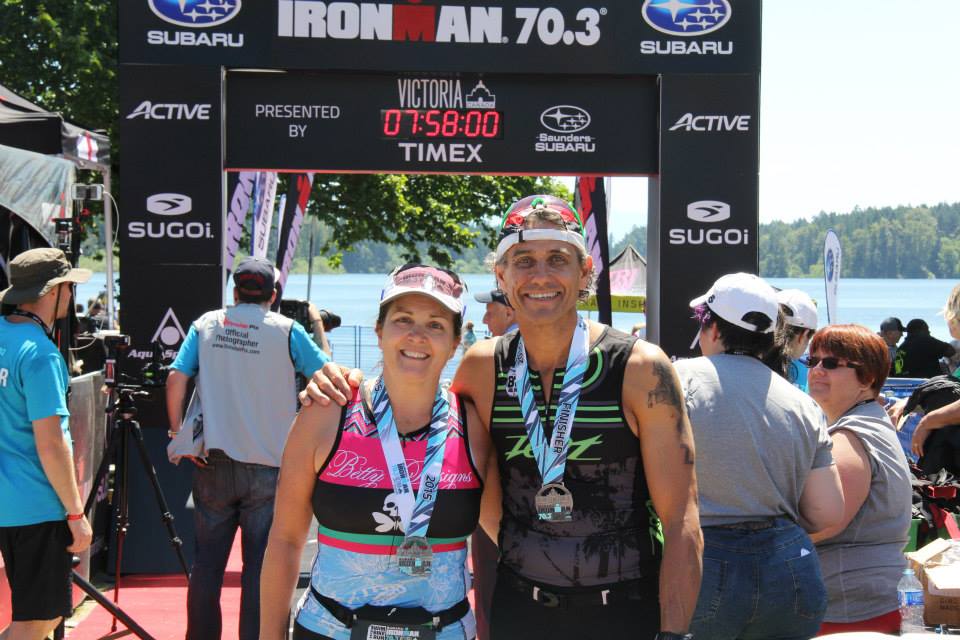
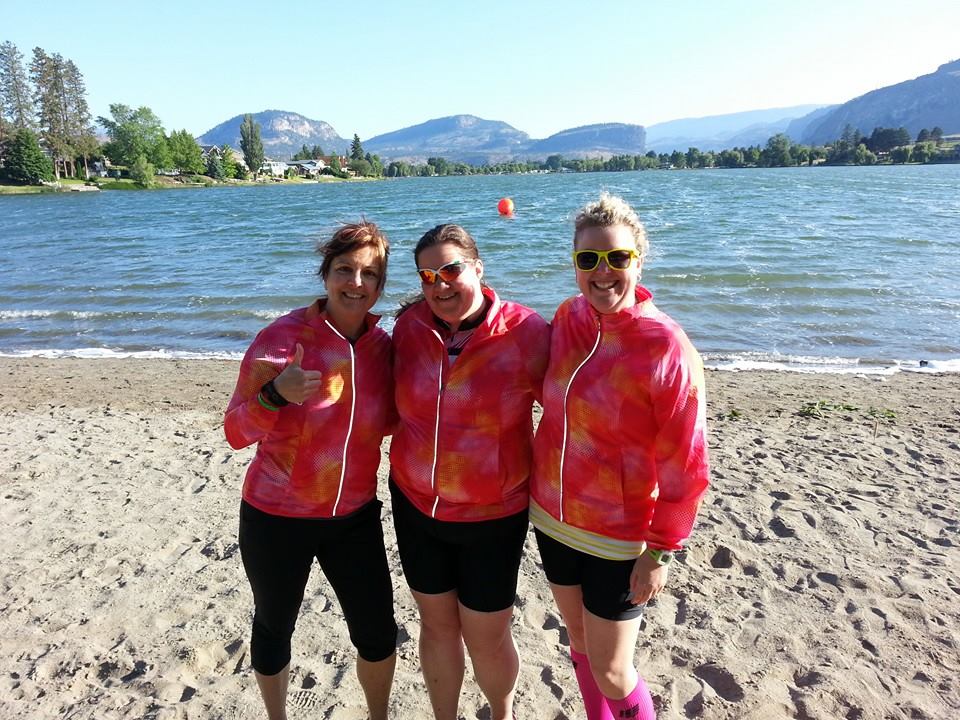 In 2015, after spending a year of supporting her husband, Vince, in his journey to Ironman Canada, Katrina decided she was ready to step out of her comfort zone bigger than she ever had before, and signed on the dotted line for the half Ironman race in Victoria, B.C.
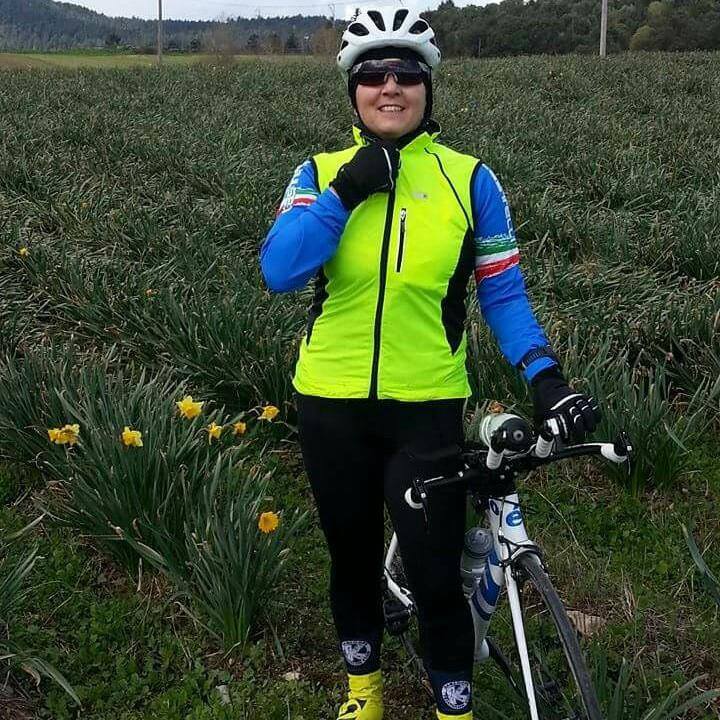 Katrina was physically and mentally in a prime place to begin her journey, but it was just a couple short months later when she would be hit with her biggest challenge yet. During an interval training run Katrina suddenly felt a “weird” popping sensation deep in her ankle. At the time though, she didn’t think too much of it and continued running. “I was trying not to be a wimp. I knew everyone was dealing with their own injuries,” she says. But the pain was worsening and swelling started to hinder the movement of her ankle. Stubborn and determined to keep on track, Katrina continued to ignore her injury for the next three to four weeks until her coach finally ordered her off to the doctor. Admittedly, Katrina says she made the mistake of not acknowledging it soon enough. For the next two months, she would bounce around from doctor to doctor trying to determine her prognosis. She would also spend many hours in the pool water running. “It was frustrating because you’re watching everyone improve on their running, and you’re driving to go water run by yourself in the pool,” she says. “I had worked so hard to get where I was, but it could always be worse. You just move forward.”
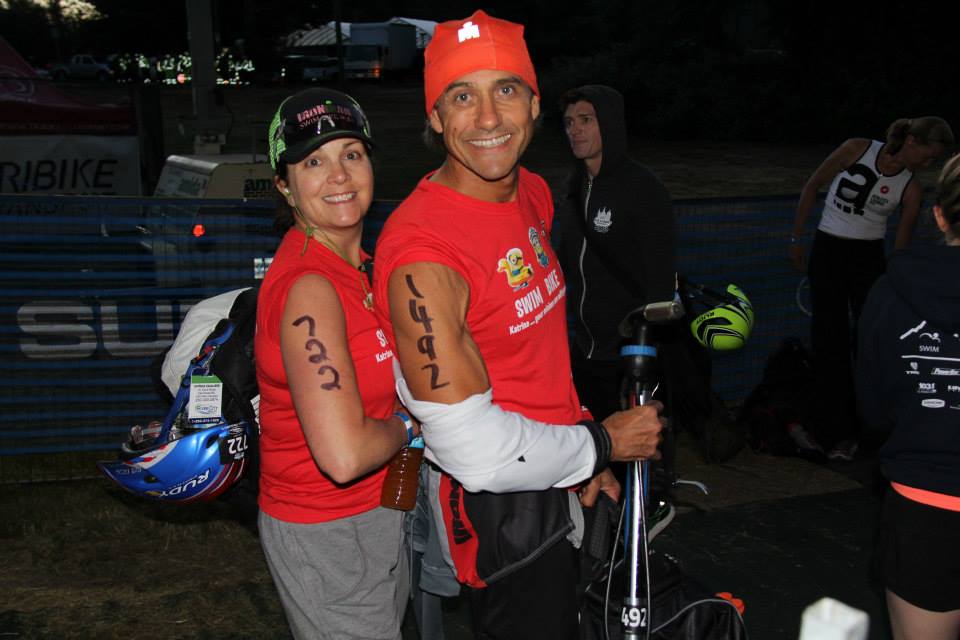 “Once the gun went off, I was calm. I couldn’t believe how calm I was. I thought, I can do this, I can swim.” Katrina settled into her rhythm and made it back to shore in a time that would position her well for the start of the bike. But it was not long after that when she heard the dreaded “pop” sound from her tire. She had a flat and it would be more than 20 minutes until she was back on course again. “I had practiced changing a tire once before,” she admits. “It was so hard watching everyone else ride by as time ticked on.” But Katrina did what she has done since day one of her journey and forged on, never willing to give up. As she approached the bike dismount line, she recalls being happy to be off her bike and back on her own two feet, but it also meant she was in for 21 kilometres of pounding on her injured ankle.
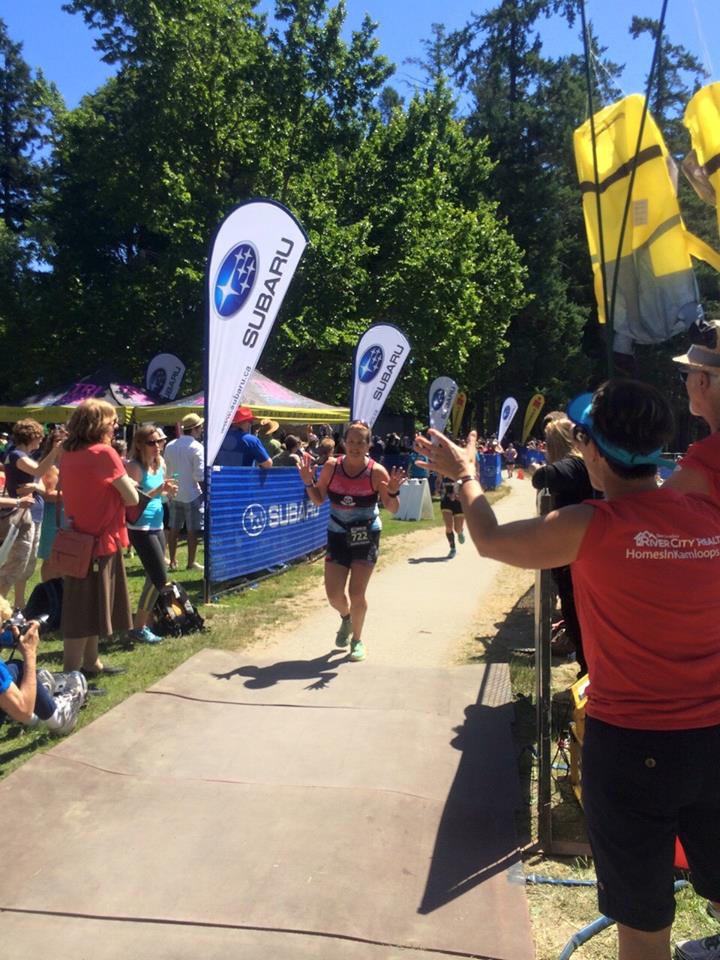 “By about 11 kilometres my ankle was throbbing,” she recalls. “The swelling had gone up so much that the tape was digging into my foot.” Katrina was forced to a walk. In her mind, she battled with knowing she was losing time, but it was all she could do to keep moving forward, one step at a time. “The last 5K hurt. My ankle wasn’t moving anymore and the swelling continued to get worse,” she says. As Katrina tried to compensate for the pain, other parts of her body felt the shift and become aggravated. She could feel it from her hips to her toes. Still though, Katrina wasn’t stopping for anything. “I wouldn’t stop, unless it broke, even then I would have crawled across the finish line,” she laughs.
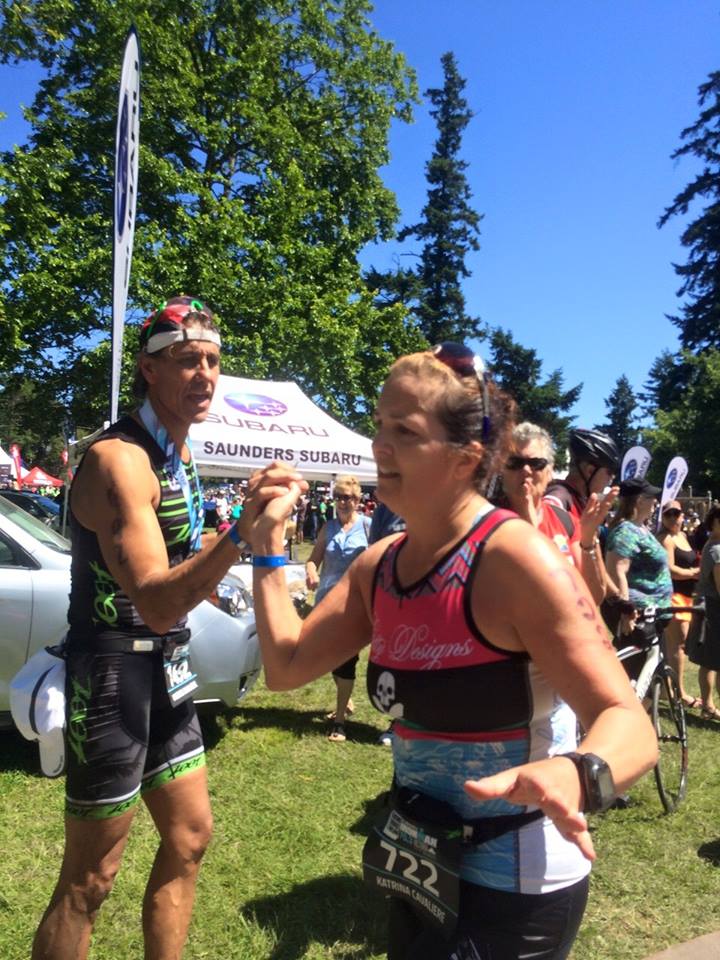 With less than one kilometre to go, Katrina mustered everything she had to turn up her cadence for the finish line. This was the moment she had worked so hard for, and in that moment, she was just grateful not to be dragging herself towards the finish. “I remember seeing the red carpet and I saw my friends, and my mom waiting to give me my medal,” she recalls. “And then I looked up and I’m like, oh my god, I’m done.”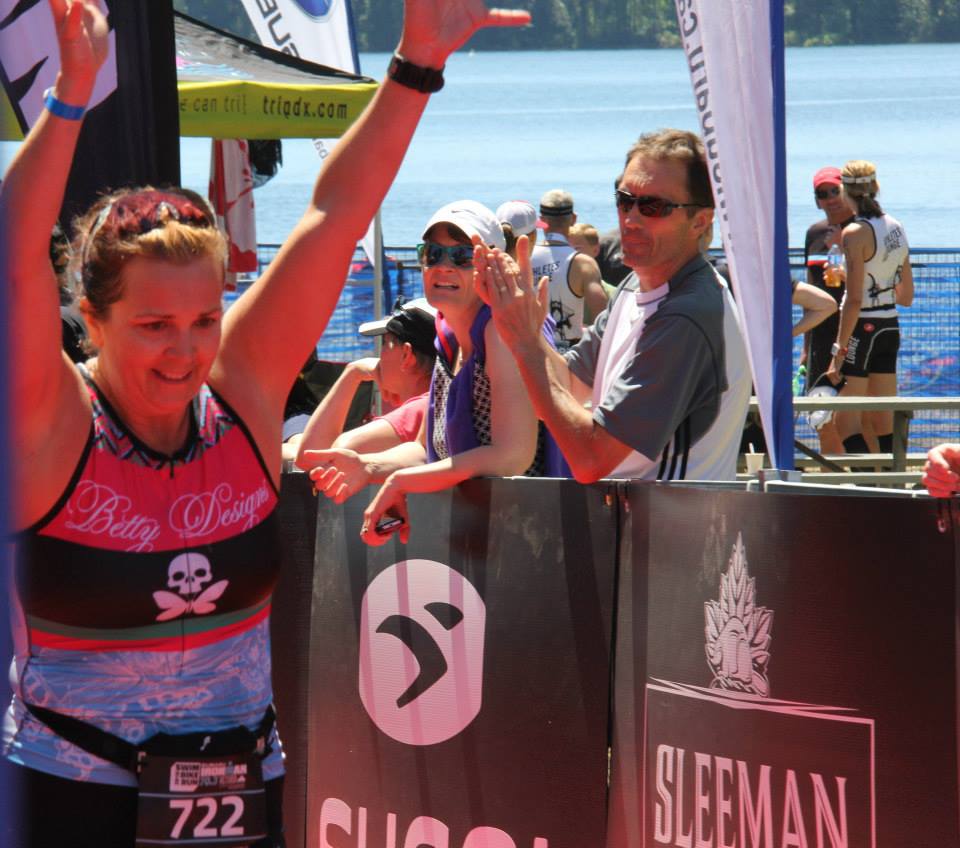
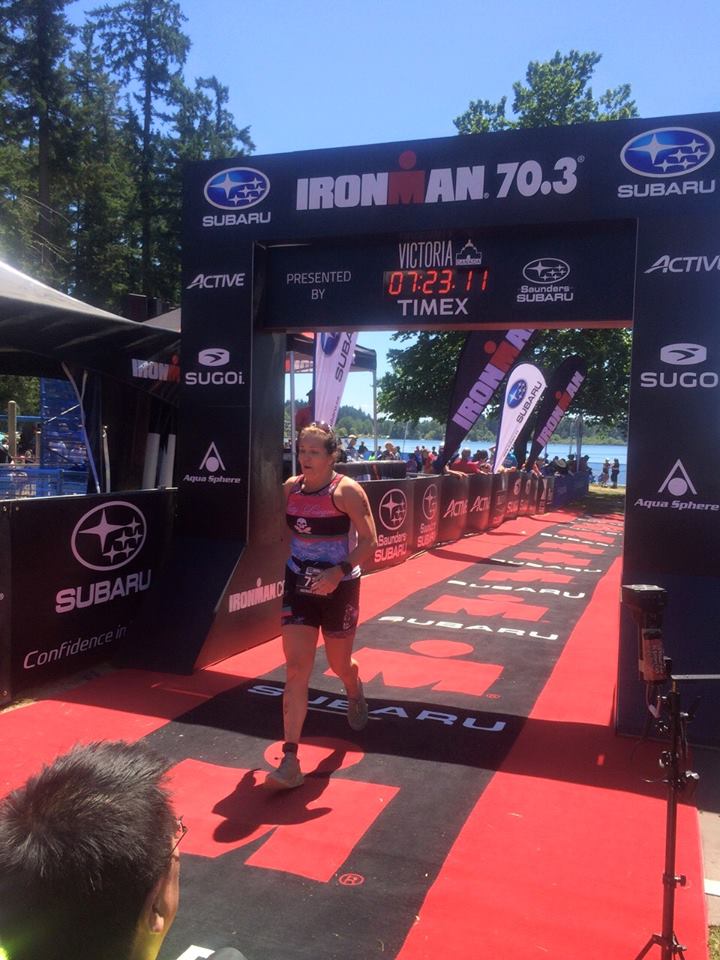
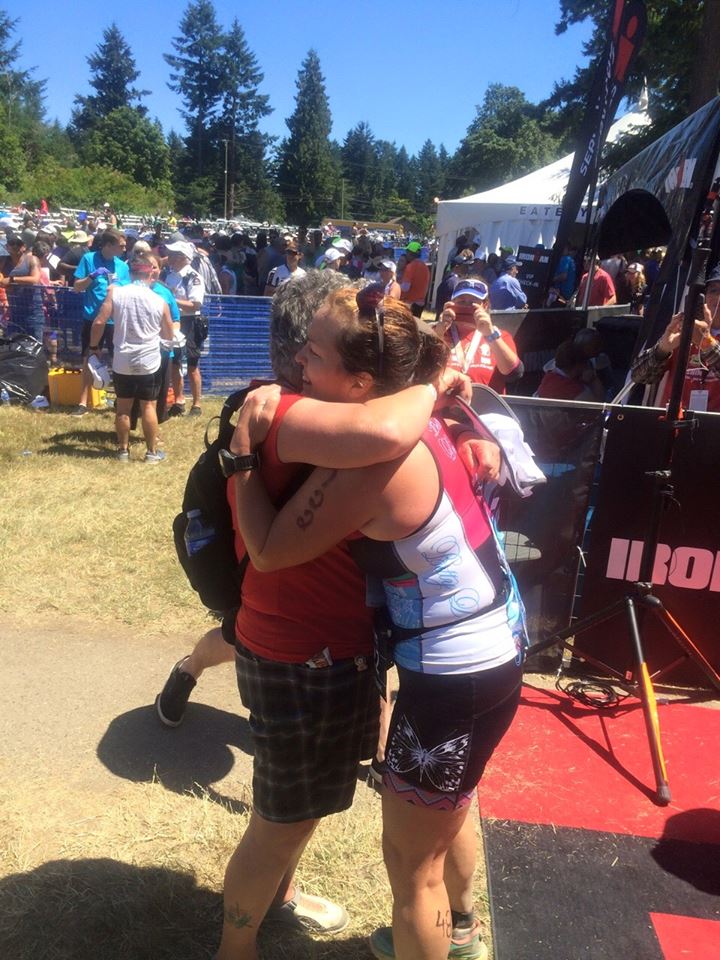 Katrina finished her race in a time of 6 hours 56 minutes, and with a smile on her face. “This was me doing something at 48 years-old; it took me a long time to believe in myself,” she says. “But it doesn’t matter how old you are, you can still try something different and push yourself.”
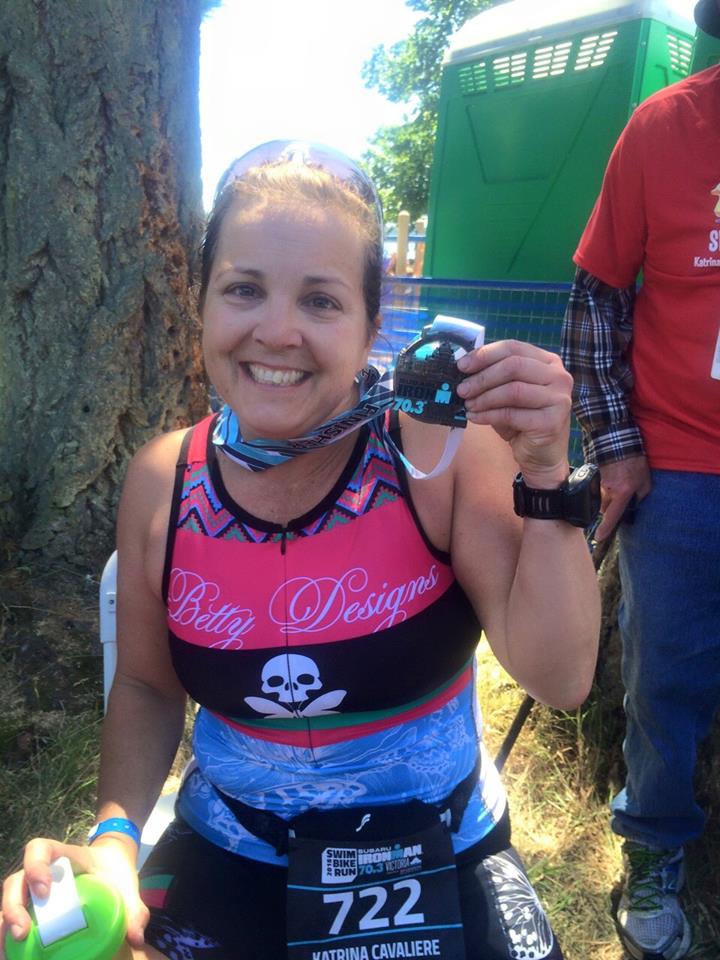 Katrina credits the sport of triathlon for pushing her from the sidelines to being a competitor and an athlete. The fire that burns in her eyes during every workout comes from a place of determination and a place of knowing she is stronger both mentally and physically than ever before in her life.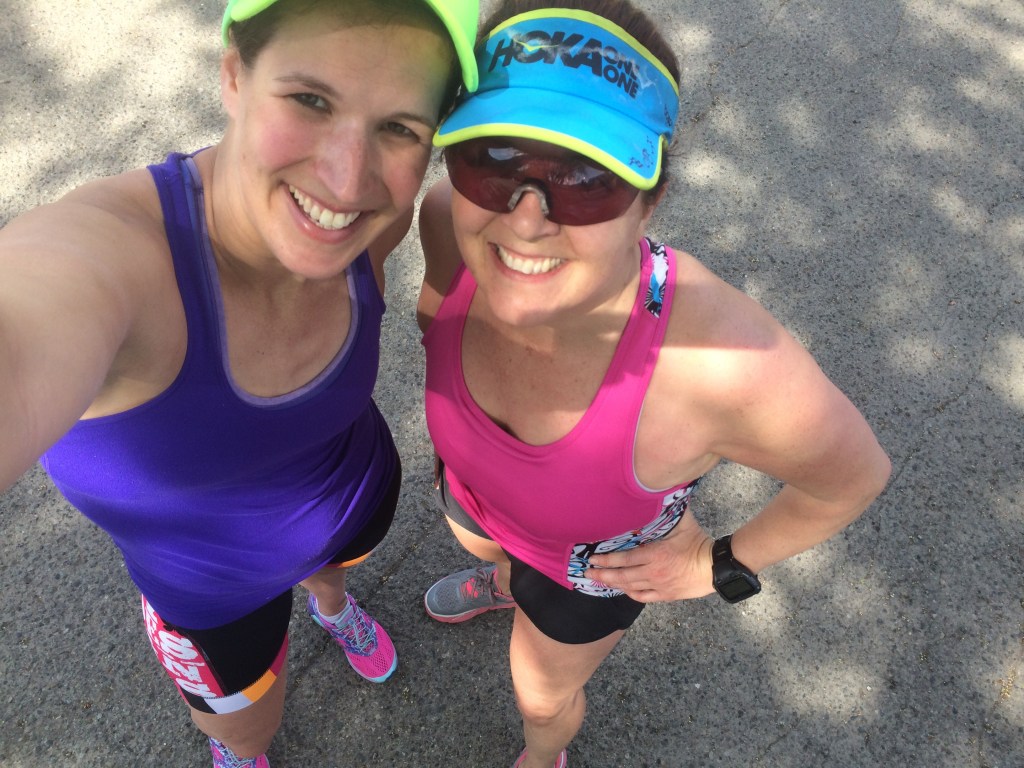

 Rust2Iron